Case 29 – Bell inn Hotel, Thetford
History
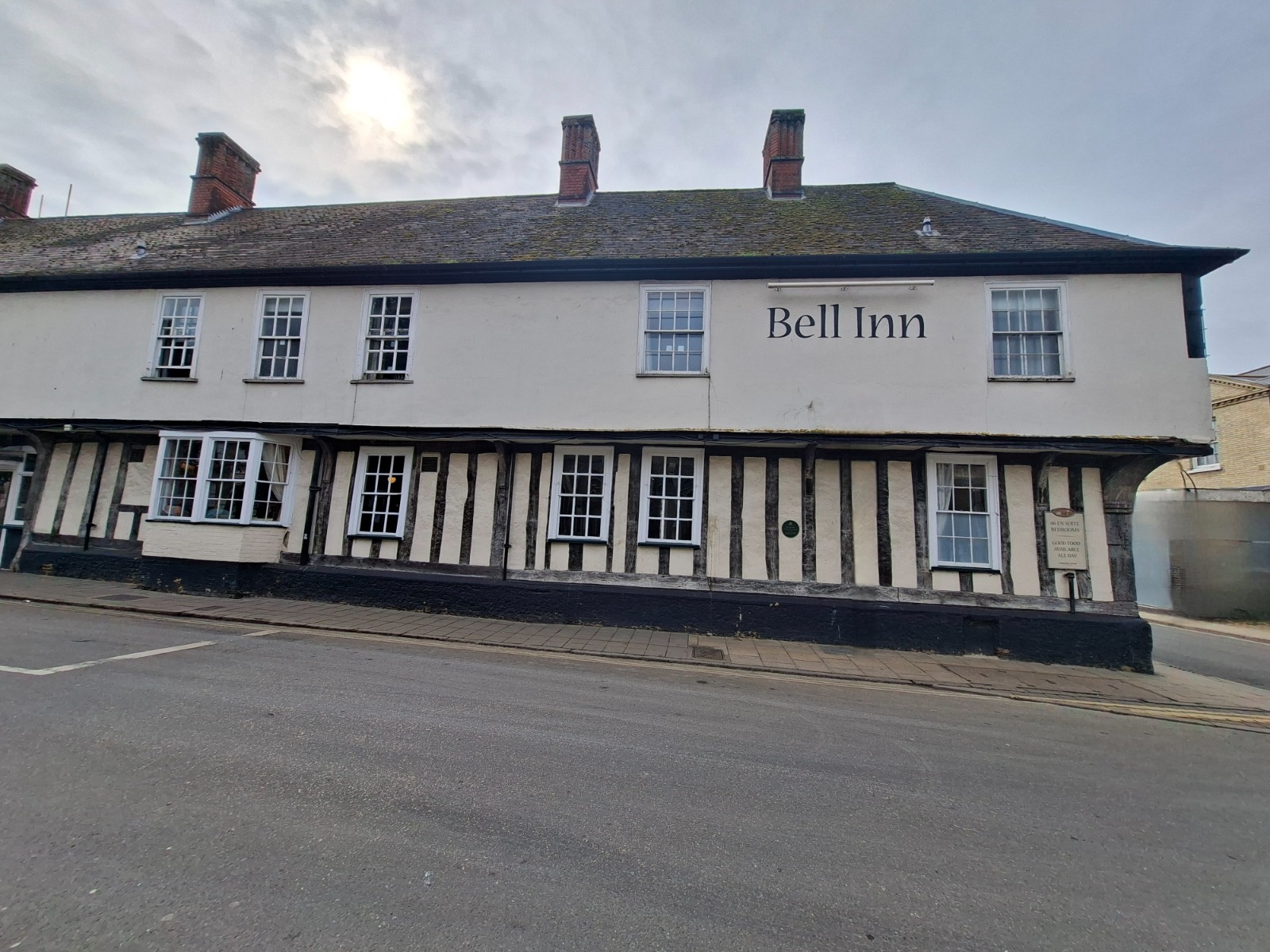
The Bell Hotel on King Street, Thetford, is one of the town's oldest and most significant historic buildings. Documentary evidence shows that there has been an inn on the site since at least 1493, making it over 530 years old. The oldest surviving part of the building is a timber-framed structure dating from the late 15th century, and today the hotel is protected as a Grade II* listed building due to its exceptional historic interest.
During the coaching age, the Bell was one of Thetford's principal coaching inns on the important London to Norwich route. Mail coaches regularly stopped there for meals, overnight stays, and horse changes. The inn became a busy meeting place for travellers, merchants, local gentry, and public events. Historical records show turnpike meetings, wool fair dinners, and coaching services operating from the Bell throughout the 18th and early 19th centuries.
The building evolved over the centuries, with significant extensions added during the 17th and 19th centuries. Following the arrival of the railway in Thetford during the Victorian era, the importance of coaching inns declined, and the Bell gradually developed into the hotel we know today. The building retains many historic features, including exposed timber framing, medieval architectural details, and even Tudor wall paintings that were rediscovered in 1938.
The Bell is also closely associated with Dad's Army. During filming in and around Thetford, many cast and crew members stayed at the hotel, and it became something of an unofficial headquarters for the production. This connection remains a draw for television enthusiasts visiting the town.
Adding to its folklore, the Bell is reputed to be haunted by Betty Radcliffe, an 18th-century landlady who managed the inn after the death of her husband in 1792. Stories of paranormal activity have become part of the hotel's long-standing reputation.
Today, the Bell Hotel remains one of Norfolk's finest historic inns, standing as a reminder of Thetford's importance on England's ancient coaching routes while continuing to welcome visitors more than five centuries after it was first recorded
Our investigation