Case 19 – St George’s Theatre, Great Yarmouth
History
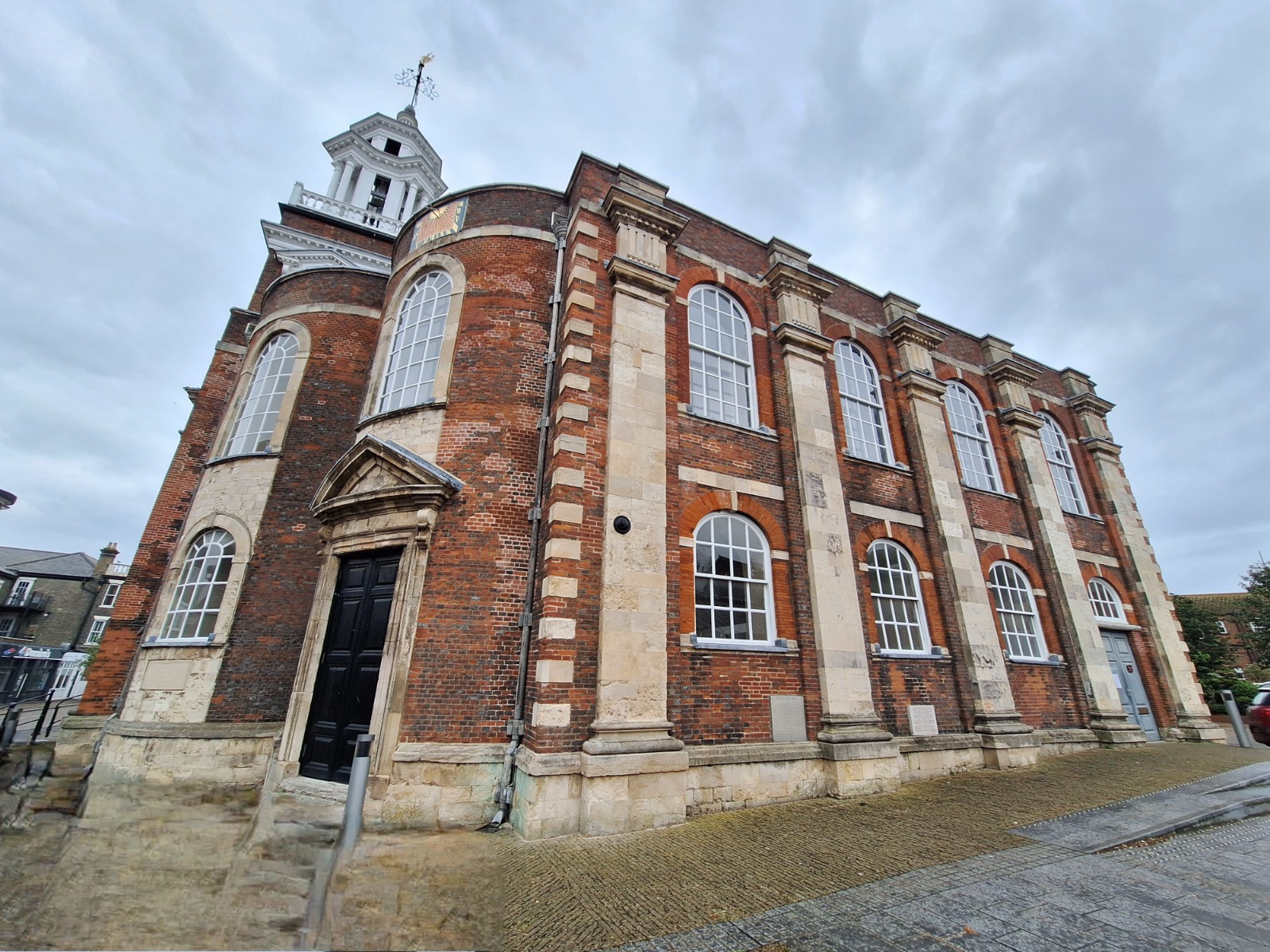
St George's Theatre is one of Great Yarmouth's most historic and architecturally significant buildings. Originally built as St George's Chapel, construction was commissioned by the Borough Council in 1714 after the town petitioned Parliament for an additional place of worship. Designed by architects John Price the Elder and John Price the Younger, the chapel was modelled on Sir Christopher Wren's famous St Clement Danes church in London and is now regarded as one of the finest examples of Baroque church architecture outside London.
After serving the community as a church for more than two centuries, St George's was deconsecrated in 1959. Despite being designated a Grade I listed building in 1953, the structure fell into disrepair and narrowly escaped demolition. In the early 1970s, local residents and the amateur dramatic society The Masquers campaigned to save the redundant chapel and transform it into a centre for the arts. The conversion proved successful, and the building became an active theatre hosting both local productions and professional performances.
The theatre faced another crisis in 2006 when severe structural problems, including an unstable tower, forced its closure. The building was placed on English Heritage's "At Risk" register while efforts were made to secure funding for restoration. In 2009, grants from the Heritage Lottery Fund and other organisations enabled a major £4 million restoration project. After extensive conservation work, St George's Theatre reopened in November 2012, preserving this remarkable building for future generations.
Today, St George's Theatre is Great Yarmouth's only year-round theatre. It hosts a diverse programme of drama, music, comedy, community projects, youth theatre, and touring productions, while continuing to celebrate the rich heritage of a building that has served the town for more than 300 years.
Our investigation