Case 12 – Happisburgh Lighthouse
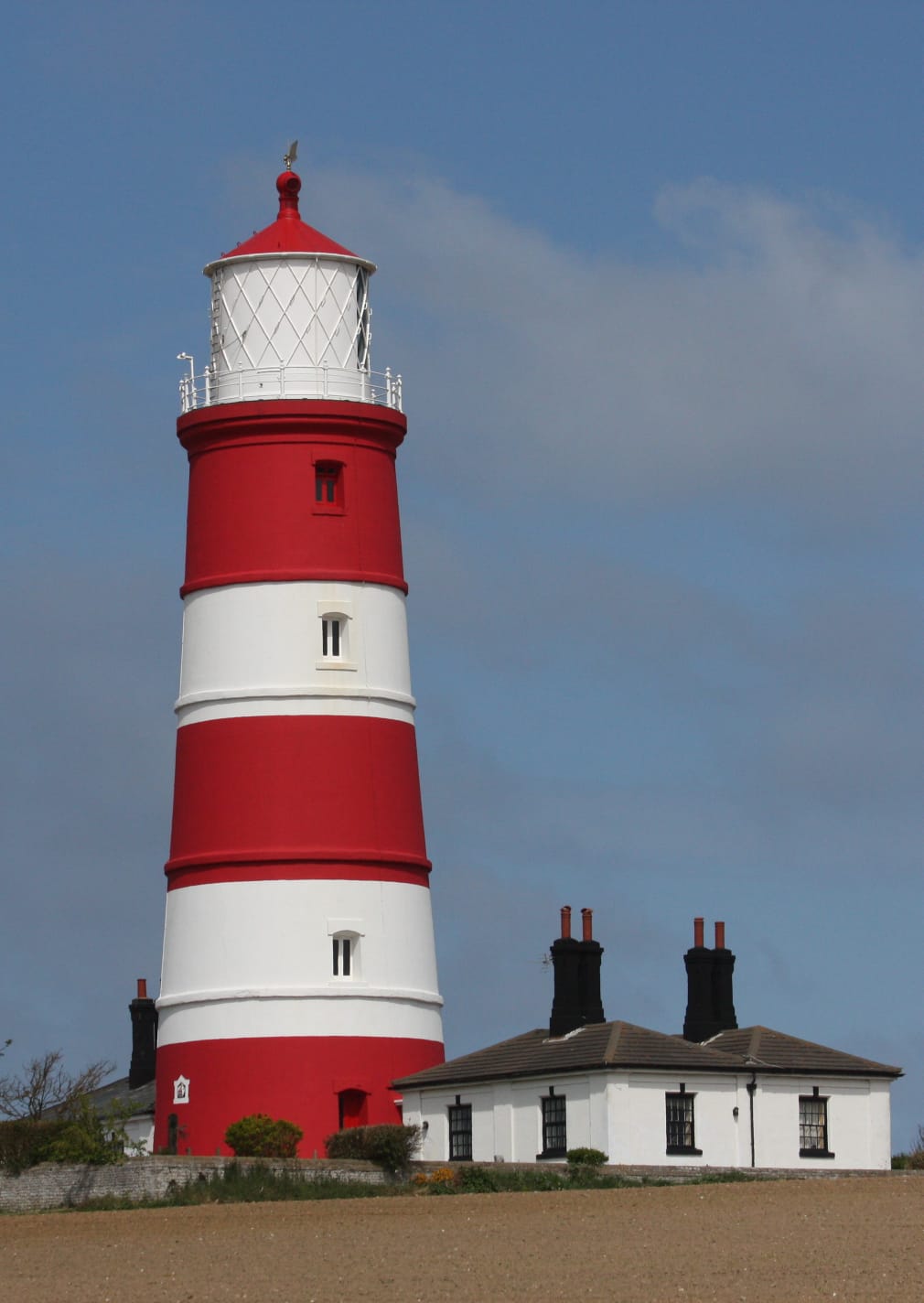
History
Happisburgh Lighthouse is one of Norfolk's most iconic landmarks and holds the distinction of being the oldest working lighthouse in East Anglia. Construction began in 1790 following a devastating storm in 1789 that claimed around 70 ships and more than 600 lives off the Norfolk coast. An inquiry into the disaster highlighted the lack of navigational warning lights along this dangerous stretch of coastline, leading Trinity House to build two lighthouses at Happisburgh: the High Light, which still stands today, and the Low Light, which stood closer to the cliff edge. Both lights entered service on 1 January 1791.
The two lighthouses worked together as leading lights, helping mariners safely navigate around the treacherous Haisborough Sands. However, coastal erosion increasingly threatened the Low Light, and it was withdrawn from service and demolished in 1883. To make the remaining tower easily recognisable during daylight, the High Light was painted with its distinctive three red bands, a feature it retains today. Over the years the lighthouse was modernised with gas lighting, paraffin burners, acetylene, and eventually electricity in 1947, increasing both its efficiency and range.
In 1988, Trinity House announced plans to close the lighthouse as part of a review of navigational aids. However, a determined local campaign successfully saved it from extinction. Today, Happisburgh Lighthouse is unique as the only independently operated lighthouse in Great Britain, maintained through charitable support and volunteer efforts. Standing 85 feet tall and visible for up to 18 miles out to sea, it remains a vital part of Norfolk's maritime heritage and a symbol of the community's commitment to preserving its history.
Our investigation