Case 26 – Overstrand Hall, Overstrand
History
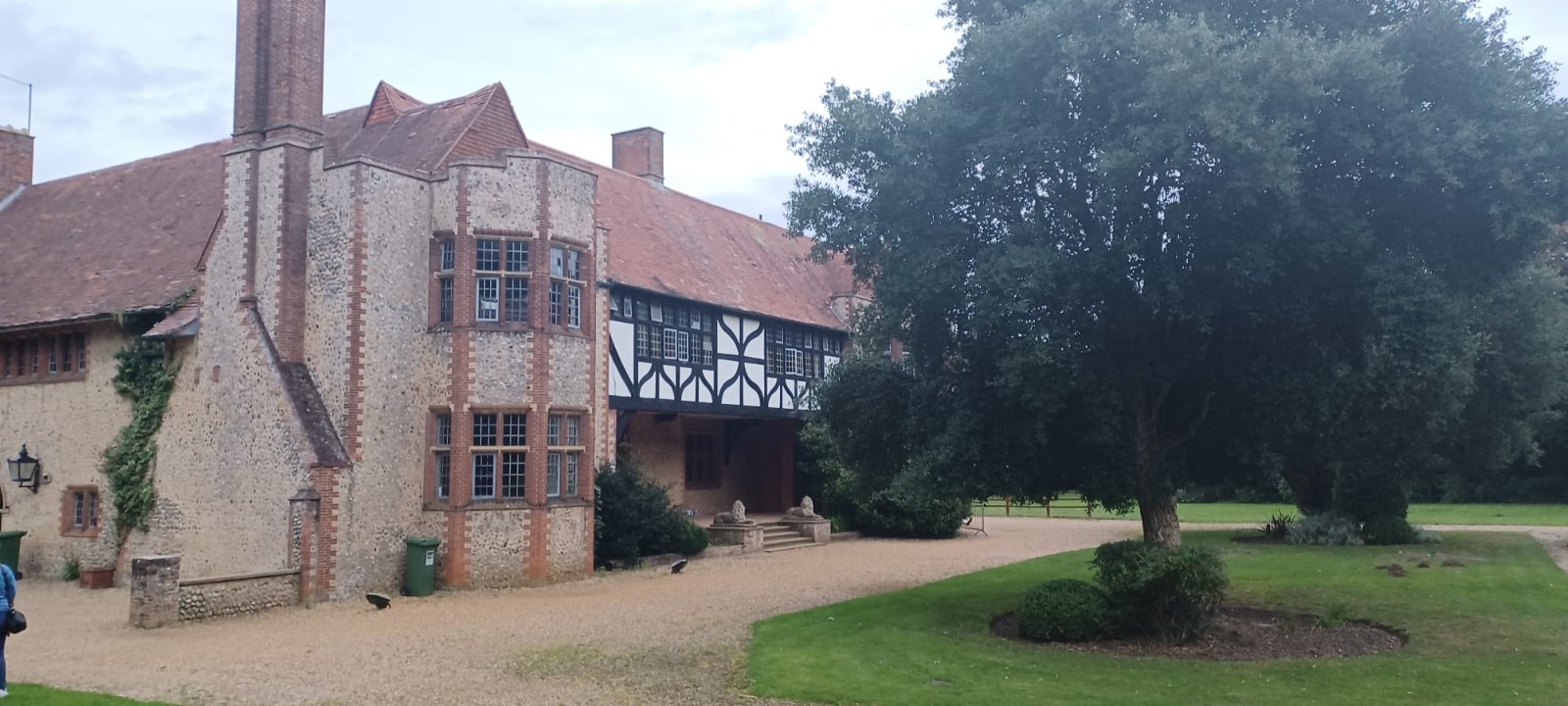
Overstrand Hall is one of Norfolk's most remarkable country houses and is considered an important early work of the celebrated architect Sir Edwin Lutyens. Built between 1899 and 1901 for Charles William Mills, 2nd Baron Hillingdon, the hall was designed as a coastal country retreat overlooking the sea near Overstrand. It stands on the site of an earlier hall and forms part of the wave of grand houses built in Overstrand when the village became known as the "Village of Millionaires" during the late Victorian and Edwardian periods.
Lutyens created a highly imaginative building that combined a variety of architectural styles and materials. Using flint, brick, stone, timber framing, and tiled roofs, he blended Jacobean, Arts and Crafts, vernacular, and classical influences into a complex courtyard design. Architectural historian Nikolaus Pevsner described Overstrand Hall as one of Lutyens' most remarkable works, reflecting the architect's growing confidence and creativity at the turn of the twentieth century.
During the First World War, the hall was used as a military hospital for wounded servicemen. In 1932, it was sold and converted into a convalescent home, where patients recovering from illness or surgery could recuperate in the healthy coastal environment. It remained in healthcare use for many decades, becoming well known to generations of people from Leicester and surrounding areas who stayed there during recovery.
Recognising its architectural significance, Overstrand Hall was designated a Grade II listed building in 1972. Since 1999, the hall has operated as a residential activity and educational centre for young people, continuing its long tradition of serving the public in a different capacity. Today, while no longer a private country house, Overstrand Hall remains one of the finest examples of early Lutyens architecture in Norfolk and an enduring landmark of the North Norfolk coast.
Our investigation